Cookware presses
8 presses
Draw depth and sheet thickness are decisive. Knowing the deepest point of the part and in how many stages it is drawn is enough.
Parts pressed in this sector
Some of these are genuine samples pressed on ÖZKOÇ presses; the ones marked representative show only the shape of the part. If you find one that resembles your own part, send us its drawing and we will tell you which press it is made on. Send your part drawing
 representative
Sink bowl 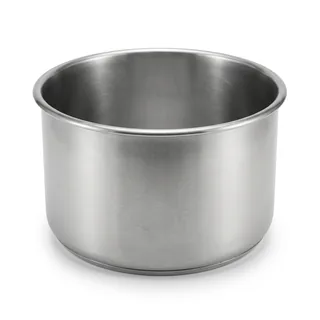 representative
Pot and cauldron body 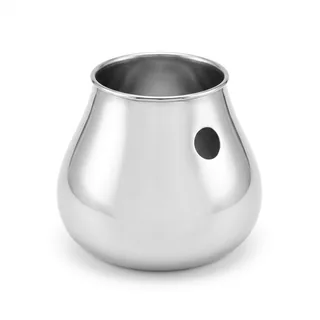 representative
Teapot body  representative
Stainless steel rectangular container and lid 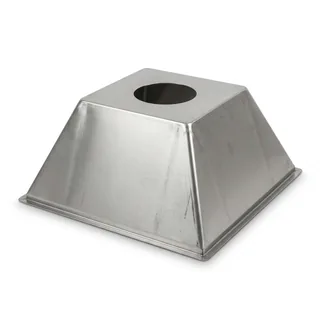 representative
Cooker hood body 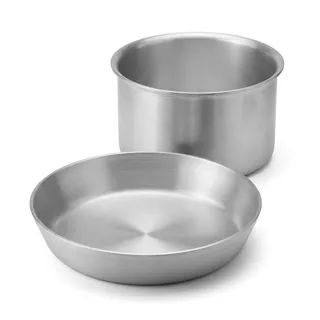 representative
Aluminium pan and pot 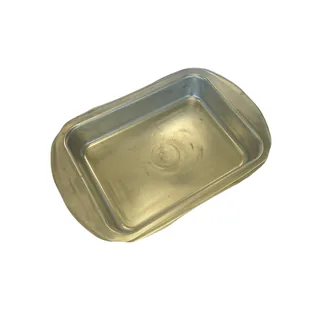
Aluminium cast body pressed in an open mould  representative
Silicone bakeware mould 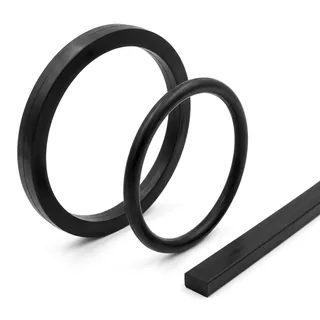 representative
Silicone gasket and sealing element 
Melamine tableware 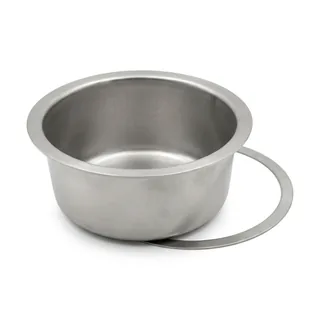 representative
Flange trimming of a drawn vessel 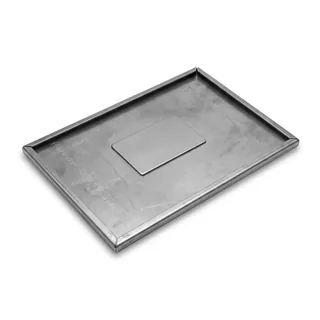 representative
Edge bending and mounting face  representative
Lid and frame form
Presses used in this sector
 COLD
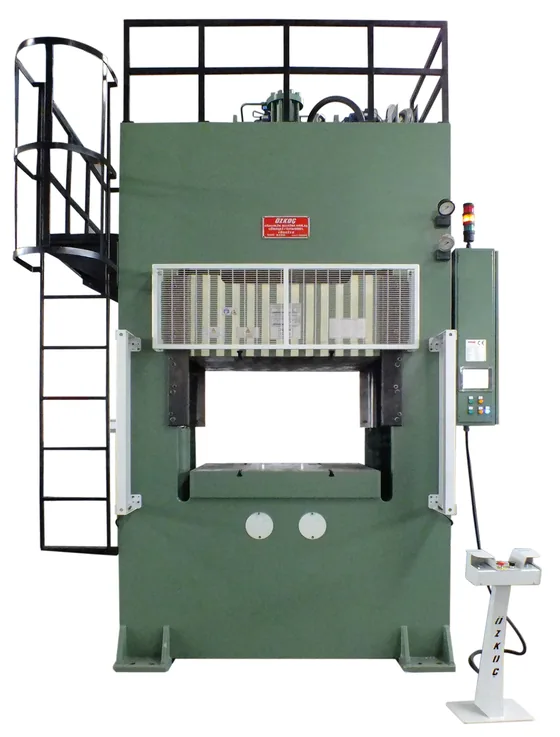
COLDDeep Drawing Press
Deep drawing press — draws sheet metal into seamless vessel and body forms; the blank holder prevents wrinkling, and blank holder force and drawing speed are set independently.
- Sink bowls
- Pot and pan bodies
- Teapot body
 COLD
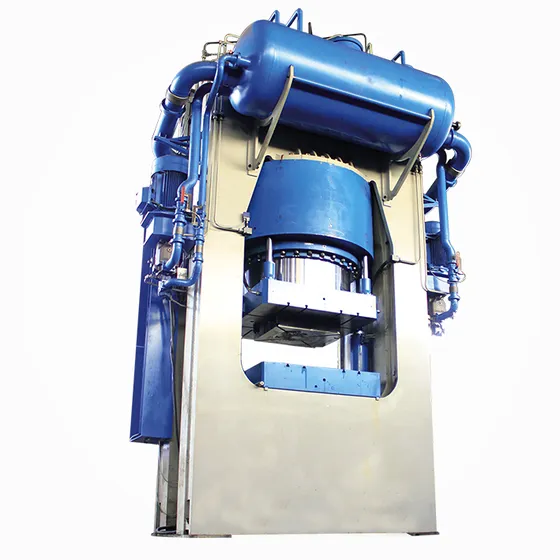
COLDHydraulic Forming Press
Single-acting hydraulic forming press — no blank holder; for shallow forming, bending, embossing and sizing work. Force is obtained at any desired point of the stroke.
- Cooker hood body
 COLD
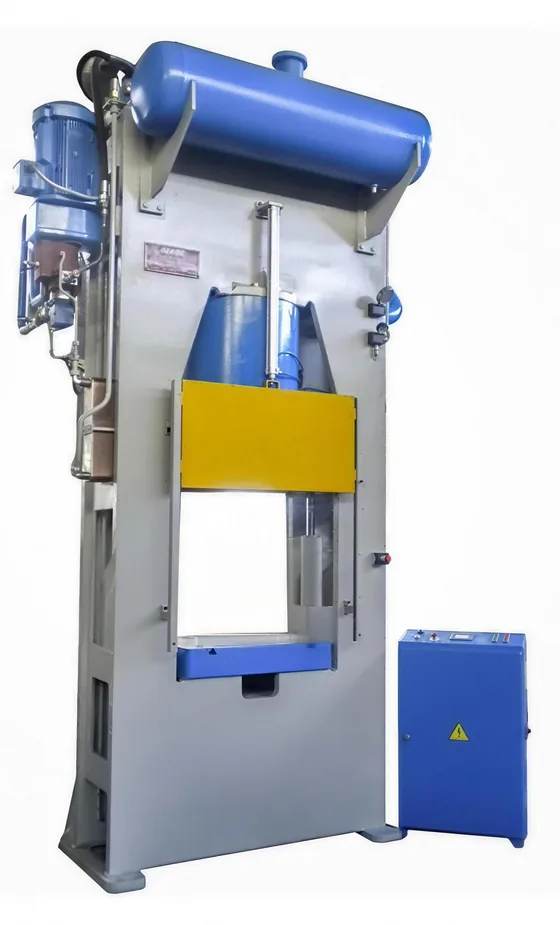
COLDCoining Press
Coining press — work hardening and chipless sizing by cold coining; a rigid frame at high tonnage with smooth, controlled force application.
- Aluminium pan and pot bodies
- Sized kitchen utensils
 SPECIAL
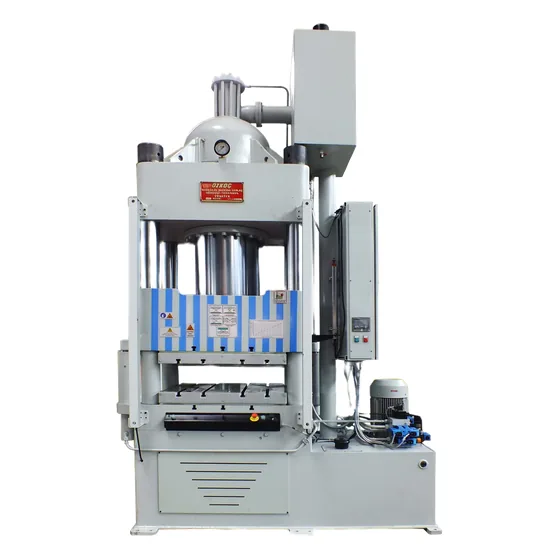
Hydraulic Casting Press
A hydraulic casting press developed by Özkoç itself, turning molten aluminium into finished parts by pressing it in an open mould — the low-tonnage, low-scrap alternative to aluminium die casting.
- Aluminium cast bodies to be Teflon-coated or painted
 HOT
HOTSilicone Curing Press
A hot hydraulic press that turns solid silicone compound into a finished part by vulcanising it under pressure in a heated mould.
- Silicone baking moulds
- Silicone kitchenware parts
- Gaskets and handles
 HOT
HOTMelamine Press
A hot hydraulic press that presses tableware, panels and sanitary products by curing melamine and resin-based thermoset compounds in a heated mould.
- Melamine plates, bowls and serving sets
- Kitchen tableware
 COLD
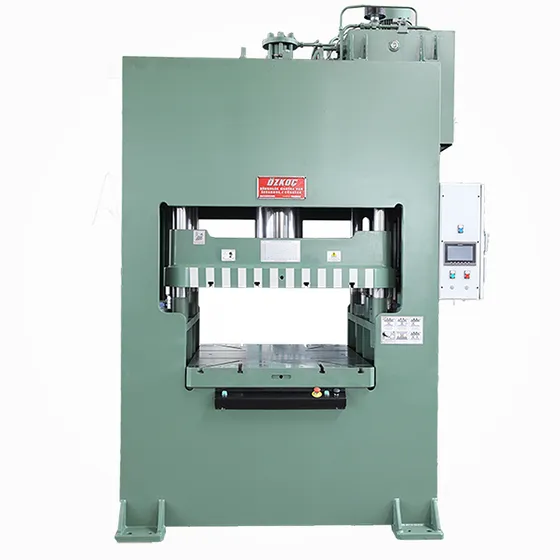
COLDHydraulic Cutting Press
A hydraulic cutting press that absorbs the shock at the moment of cutting with counter-pressure cylinders — its real job is cutting; flange trimming and bending are also done in the same frame.
- Sink flange trimming
- Sink flange trimming and edge curling
- Pot rim trueing
 TRANSFER
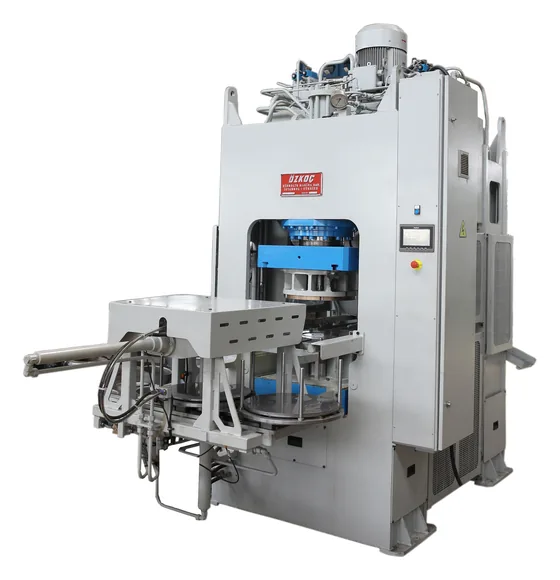
Hydraulic Transfer Press
A hydraulic transfer press that gathers every step of a part formed in several steps into one machine — the part is carried automatically between stations and one product is finished with every press stroke.
- Pot and pan bodies
- Teapot body
- Sink bowls
What matters when choosing a press?
Deep Drawing Press
- Adjustable speed and blank holder forceDrawing speed and counter-holding force are set to suit the part in order to keep wrinkling under control. As the sheet gains depth, material builds up at the edge; the blank holder holds it down and eliminates wrinkling.
- Blank holder pressure is decisiveIf the pressure is too low the sheet wrinkles, if it is too high the flow is choked and the part tears; the window between them is narrow.
- Seamless vessels and bodies, multi-stage drawing
Hydraulic Forming Press
- Single-acting · no blank holderThere is no counter-holding; the form is not deep and there is little or no wrinkling — a blank holder is not needed.
- Shallow forming, bending, embossing, coiningAs long as the depth of the shape stays shallow the job is finished with a single action and no cushion setting is required.
- A frame that does not deflect is decisiveIf the frame deflects the embossing does not come out fully, and the die gets the blame.
- Standard sizes and tonnages
Coining Press
- Work hardening through cold coiningThe grain structure is compacted and the yield strength rises; the part comes out stronger.
- A rigid frame at high tonnageA frame that deflects loses the dimension and wears the die.
- Shock-free force transitionsApproach, coining and decompression pass smoothly through a proportional valve; there is no impact.
Hydraulic Casting Press
- It works with an open mouldNo air bubbles are trapped inside the aluminium.
- Half the tonnage of die castingThere is no need to push molten metal through narrow channels; mould cost and floor space also come down by half.
- Around 1% scrap rateThe scrap rate for the same job in die casting is in the tens of per cent.
- A design developed by Özkoç itself
Silicone Curing Press
- Solid silicone compound workIt is the machine for production from solid compound; injected liquid silicone is a different route.
- The same hot press family as the melamine and rubber presses
Melamine Press
- Thermoset curing, no way backA cured part cannot be remelted; quality is determined not by force but by thermal discipline.
- Zoned heating and degassingIf the volatiles formed in the compound are not vented, blisters and porosity are left on the surface.
- Two-daylight toilet seat arrangementOn a large, asymmetric seat a ram that descends parallel holds thickness and flatness.
- The same hot press family as the silicone and rubber presses
Hydraulic Cutting Press
- Cutting is the real purposeBending and flange trimming are done on the same press too; but the machine is built for cutting.
- The counter-pressure cylinders take the shock, not the frameAt the end of the cut the counter-pressure cylinders come in and absorb the sudden release of load.
- The compact alternative to a mechanical pressAt high tonnage the frame of a mechanical (eccentric) press grows and becomes expensive; a hydraulic press does the same job in a smaller package.
- Longer die life, cleaner cut edgeThe counter-pressure cylinders also help parallelism, and the impact does not pass into the die.
Hydraulic Transfer Press
- One finished part per press strokeAll the steps are pressed in the same cycle; the part is passed automatically between stations.
- No press, operator or die per stepOne machine gathers work spread over separate presses; intermediate handling and work in progress disappear.
- Not just a press, an automation lineThe trimming, cutting and piercing needed between the steps are applied on the same line.
- With sheet cutting or blank feeding, loading and transfer units