Hydraulic Cutting Press
- Cutting is the real purposeBending and flange trimming are done on the same press too; but the machine is built for cutting.
- The counter-pressure cylinders take the shock, not the frameAt the end of the cut the counter-pressure cylinders come in and absorb the sudden release of load.
- The compact alternative to a mechanical pressAt high tonnage the frame of a mechanical (eccentric) press grows and becomes expensive; a hydraulic press does the same job in a smaller package.
- Longer die life, cleaner cut edgeThe counter-pressure cylinders also help parallelism, and the impact does not pass into the die.
What is a Hydraulic Cutting Press?
The hydraulic cutting press is built for cutting sheet metal parts. It trims the flange left at the mouth of a vessel after deep drawing and, where needed, bends the remaining edge; cutting and bending can be sequenced in the same frame. Its real purpose is cutting — bending is a capability that comes alongside it.
This press does not form the part; the part arrives beneath it already drawn. In cutting the real issue is not force but the sudden release of load at the end of the cut. We do not make the frame carry that shock: we absorb it with counter-pressure cylinders.
Is this press right for you?
Suitable
- Cutting thick sheet and cutting at high tonnage
- Trimming the flange left after deep drawing
- Work where cutting and bending are wanted in the same cycle
- Small-batch cutting work with frequent die changes
- If the part has to be drawn first: Deep Drawing Press
- If you need shallow forming or sizing rather than cutting: Hydraulic Forming Press
- If the cut sits inside a multi-step line: Hydraulic Transfer Press
Cookware — parts typically produced in this sector
These images are representative — they show the shape of the part; they are not the exact parts we produce. If you find one that resembles your own part, send us its drawing and we will tell you which press it is made on. Send your part drawing
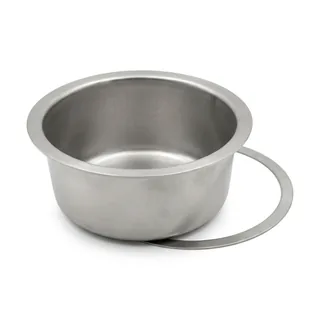 representative
Flange trimming of a drawn vessel 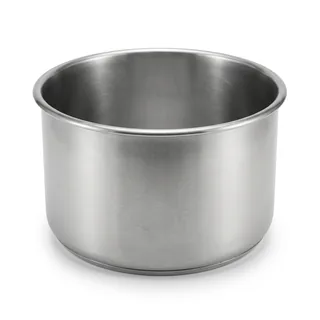 representative
Pot and cauldron body 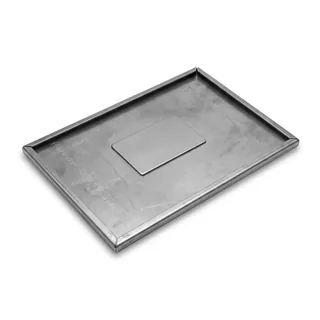 representative
Edge bending and mounting face
Automotive — parts typically produced in this sector
 representative
Flange trimming of a drawn vessel 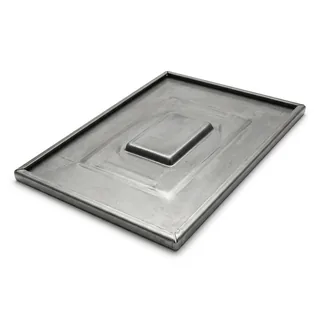 representative
Edge bending and mounting face
Metalworking — parts typically produced in this sector
 representative
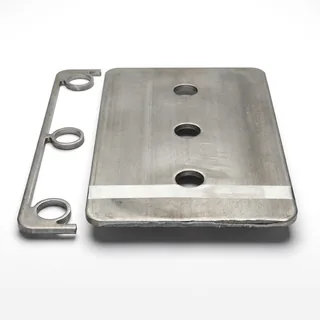
Blanked sheet metal part and scrap skeleton
This press at work
Tap the cover and the video opens on this page. Until you do, no request goes to YouTube.
Automatic-feed bulging - flange trimming - curling line
Özkoç - Automatic Servo Driven Trimming Beading Machine
Özkoç Hidrolik Makina - Deep Drawing Press - Flange trimming machine
For those who want the detail
Where the shock in cutting comes from — and how it is absorbed
Metal cutting is usually given to mechanical (eccentric) presses, because a hydraulic press does not much like cutting. A shock arises during the cut: real cutting takes place over only about a third of the material thickness, and the rest is not cutting but shearing off — the material breaks away suddenly. That sudden break drops the pressure in the hydraulic system all at once, and the frame springs back with a snatching motion. The die does not like it, the press does not like it, and the hydraulic system itself likes it least of all.
A mechanical (eccentric) press handles this more comfortably because it uses the smooth transition inherent in circular motion; that is why it is the press that comes to mind when cutting is mentioned. But at high cutting tonnages the frame of a mechanical press also grows and the cost of the press rises. This is where a hydraulic press built with a frame structure that absorbs the shock becomes a very good alternative to increasingly expensive cutting arrangements.
This is how we do it: the system pressure is kept as low as possible. At the end of the cut, at the point where the material will shear away, the counter-pressure cylinders become active and absorb the shock. A far more compact press thus carries out a cutting operation that demands high power, and the factors that damage the press are eliminated altogether. The counter-pressure cylinders also help parallelism — the cutting die lasts longer and the cut edge of the part comes out cleaner.
You can bend on the same press as well: the flange left at the mouth of a deep-drawn vessel is trimmed and the remaining edge is bent or curled. Centring the cut line, compensating for earing and allowing for springback are settled through die trials; this is not something to be hit on the first part. A different part family means a different die; the press itself does not change.
- Only part of the cut is real cutting; the rest is a sudden shear — this is where the shock comes from.
- System pressure is kept low; the counter-pressure cylinders come in at the moment of shear.
- The shock goes into the counter-pressure arrangement, not into the frame and the die.
- At high tonnage the frame and the cost of a mechanical press grow; the hydraulic solution stays more compact.
- Counter-holding helps parallelism: die life increases and the cut edge becomes cleaner.
- Flange trimming and edge bending are sequenced in the same frame; the part arrives at the press already drawn.
Rigid frame joined with prepared weld bevels
When the form or the embossing does not come out, the toolmaker is blamed straight away. More often than not the die is not the cause: the press frame deflects under load and the two halves of the die no longer seat fully on each other. The share the frame has in this is usually unknown on the buyer's side, because it is written in no catalogue.
When ÖZKOÇ builds the frame as a welded construction, it joins the crossbeams and the plates BY PREPARING A WELD BEVEL. There are many companies in the sector that join without preparing a bevel; the weld then stays on the surface only. Once the bevel is prepared, the weld penetrates the cross-section and the frame resists deflection under load.
This holds for every frame type, monoblock or column-type — it is not an option that depends on the type of press, it is ÖZKOÇ's manufacturing discipline.
- Crossbeams and support plates are joined with a prepared weld bevel.
- The weld does not stay on the surface, it penetrates the cross-section; the frame does not deflect under load.
- The same discipline is applied whether the frame is monoblock or column-type.
Ram parallelism system
On wide and asymmetric parts the load bears on one corner of the ram; the ram comes down slightly tilted and one corner of the part turns out thicker than the other. The result: excess material, uneven strength, unnecessary heat and cycle time.
In the ram parallelism system designed by ÖZKOÇ itself, four counter-pressure cylinders bring the ram down parallel to the lower plate. The difference in thickness between the corners drops to a minimum; material is saved, and the homogeneity of the part keeps the strength where it is wanted.
The same arrangement works in cutting as well: at the instant the shear occurs, the counter-pressure cylinders absorb the shock, maintain parallelism and extend the life of the cutting die.
- Four counter-pressure cylinders bring the ram down parallel to the lower plate.
- On a wide and asymmetric part the difference in thickness between the corners drops to a minimum.
- Material savings + homogeneous strength.
- In cutting it absorbs the shock and extends die life.