Cookie Settings

You can decide separately for each purpose. You can change your choice at any time from this panel, or withdraw it altogether.

Strictly necessary cookies

Those needed for the site to work and to be secure. Only the record that remembers your cookie choice and protection against attacks go in here. These are not used for marketing and cannot be switched off.

First partyozkoc_riza · 12 months

Analytics and measurement

How many people came, which pages were read, where visitors arrived from — to measure what the site does well. It does not identify people by name.

Third partyGoogle, Yandex12 months at most

Advertising and retargeting

So that, if you have visited our site, you can see our promotions on social media. No one else’s advertising is shown to you on this site.

Third partyMeta12 months at most

Session recording and heatmaps

To see where on the page people clicked and how far they scrolled. What you type into forms is not recorded — the contents of the quotation and service forms are masked before recording.

Third partyMicrosoft, Yandex12 months at most

ENEnglish
Request a Quote

History

From an apprentice in Karaköy to three generations of press building

Eighty years of craftsmanship, from 1945 to the present day: from marine engines to 7,000-tonne presses.

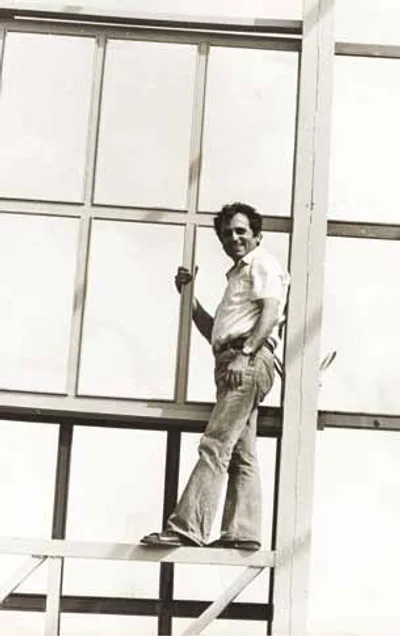
Ali Şükrü Koçan, construction of the Güneşli factory, 1978
Construction of the Güneşli factory, 1978
1945Origins

An apprentice in Karaköy

Ali Şükrü Koçan was born in 1933 in Derepazarı, Rize. He lost his father and his sister to tuberculosis; his mother was trying to make a living by making paper bags and selling them at the market. He was twelve years old when he set out so that the family could gain a foothold in İstanbul.

At the careening yard in Karaköy he became apprentice to a turner who repaired ships and marine engines. These were the engines that gave engineering its name in Western languages — the school of the self-taught machinist. At seventeen he was a well-known master at the careening yard; it was there, too, that he learnt forging and forming iron from the neighbouring smithies.

His last job with his master was to overhaul a ship the army had written off — engine and crane system included — and put it back in the water. By the time he handed the work over, his own preparations were long since finished: his master saw him off at the railway station in tears.
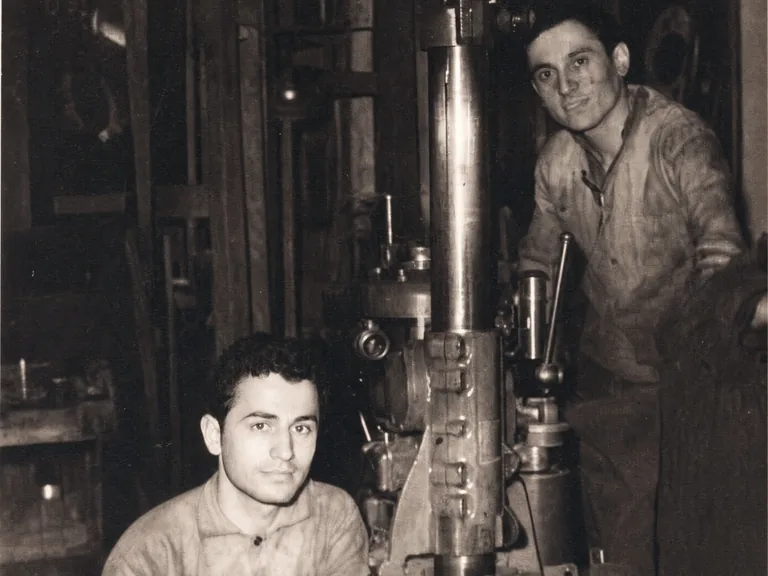
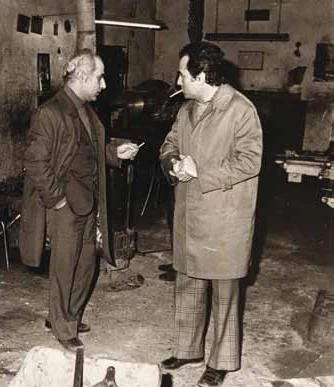
Ali Şükrü Koçan and Ahmet Özer, Karaköy careening yard, 1950
1960Germany

He learnt the language before he went

When he decided to go to Germany he worked in the workshop by day and went to German classes at night. He joined a factory that made machine tools; for a long time they had the well-known master of the careening yard do nothing but apprentice work. He did not take offence.

He worked on the lathe, on the milling machine, on the boring mill and on assembly alike — not a usual thing there. Before long he was the man the 700-strong factory called on for overtime; because of the changes he made without asking anyone, simply to make the work easier, they put his name on the roll of honour without his even knowing.

Three years later he left to go to America. He came back to Turkey to see his family, married in 1963 and never went. Years later the friend he had planned to travel with sent him a postcard with a picture of a bridge on it.

1964Foundation

Öz-Koç is founded

With his childhood friend Ahmet Özer he set to work in a workshop of 60 m²; the name of the company came from the two surnames. The aim was to make plastic goods, and for that they began building an injection moulding machine.

A buyer turned up before the machine was even finished. “We can always build ourselves another,” they said, and sold it. The next one was sold too, and the one after that. ÖZKOÇ never did become a plastics maker — it became a machine builder.

Before long they moved into a shop of 300 m². In the scarcity of those years even bolts and nuts came off the scrap heap, and delivery times ran to two years. “We used to work until the small hours. And did we make a lot of money? No.”

Ahmet Özer (left) and Ali Şükrü Koçan (right) in their own workshop
1975Invention

The first prefill valve made in Turkey

Melamine kitchenware was in fashion in those years, but the presses on the market were inefficient. Huge pumps were used to bring the ram down quickly — whereas a small pump was enough to compress the melamine.

“It was known that there was such a thing as a prefill valve in the West, but what it was and how it worked — how was I to know? I set about finding out.” After months of trial and error he built the valve: gravity was enough to bring the ram down, and the large pumps were out of the circuit. The source records this as the first prefill valve made in Turkey — not a copy.

The result could be measured: while the best press on the market gave 2 parts per cycle, the ÖZKOÇ press gave first 8, then 16. Within a few years melamine ware came down from the shelves of the luxury shops to the market stall. The same valve design is still in use today. “A good many press builders copied it. Never mind, let them — that is the fate and the responsibility of going first.”

1976Export

The first press goes abroad

The first export went to a neighbouring country. They had a joiner make the crate the press was to go into; the crate broke apart as it was being loaded onto the lorry, and they got the press back down to the ground with difficulty.

“We built the machine and we were going to export it, but we could not build a crate.”

1978Plant

Güneşli: the factory built with his own hands

He bought the land and did the design of the building himself, going round the buildings of firms he knew. The steel structure, the columns, the trusses, the crane girders, the frames, even the steel doors — all of it was made in the shop in Rami and carried there by lorry. There was neither a crane nor the money to hire one.

He would leave work at five in the evening and go to the building site with his children. Ali Erdem and Cem, then of primary and secondary school age, helped their father with the assembly and the welding.

When a newly opened road cut across the entrance to the factory 5 m lower down, the move had to wait: the building was occupied in 1986.

Ali Şükrü Koçan, construction of the Güneşli factory, early 1980s
1980Product range

Deep drawing presses and the thermal base

As the manufacture of steel pans spread, deep drawing presses were needed. He applied the prefill valve to these presses as well, and again the difference was measured in figures: “With the presses of the day, a stainless steel bowl could be pressed 800 times at most. Our machine could press 2.500 of the same bowl.”

Bonding aluminium to the base of a pan — what is now called a thermal base — was work nobody knew about in those years; the methods coming from Europe were expensive. Although it was not strictly his own field, it caught his interest and he was convinced it could be done under heat and pressure on a hydraulic press.

“My father would bring home the samples he had pressed in the shop during the day; we would heat them on the stove and cool them in water — that was our work in the evenings until bedtime.” Within a year he had found the method, the parameters and the die structure by trial and error. The base bonding processes carried out in the industry today follow on from that work.

1984Manufacturing method

The cylinder they said “could not be rolled”

The cylinders were made by rolling hot-rolled plate with a method they had worked out themselves. With the known rolling methods, that wall thickness was held to be impossible to roll to so small a diameter.

A European hydraulic press manufacturer ordered a press cylinder of 600 ton with a stroke of 2.000 mm. While it was being made, one of the firm’s engineers called in some concern: they had run the calculations and concluded that it was not possible. The answer was that those cylinders had been made by this method for thirty years. The cylinder was built and shipped.

“We made mistakes, but we were not afraid and we did not back down. We never said, ‘This is not even done in Europe, so why should it fall to us to do it?’ Do not be afraid of what is new and different.”

1990Defence

“Only Ali Şükrü Bey can sort your job out”

One day a long-standing customer described how pleased he was with his press and left. The other visitor waiting in the room was not someone they knew: a retired officer looking for a solution for producing composite protective material for the Turkish army.

When he was asked, “How did you find us?”, his answer was this: “Wherever I went they told me, ‘Only Ali Şükrü Bey can sort your job out.’ The conversation I have just witnessed explains well enough why they said so.”

That is how the press technology used in the manufacture of composite-based protective plates and helmets began.

2000Generational handover

Hadımköy and three generations

During the construction of the Hadımköy plant the children followed their father’s example. Ali Erdem and Cem had been in the workshop since their primary school summer holidays: “Our playground was the workshop and our toys were metal parts.” Both became mechanical engineers.

Ali Şükrü Koçan was a primary school graduate. Engineers who came to place an order would ask which school he had graduated from and be taken aback when they heard the answer. He trained a great many apprentices, masters and engineers.

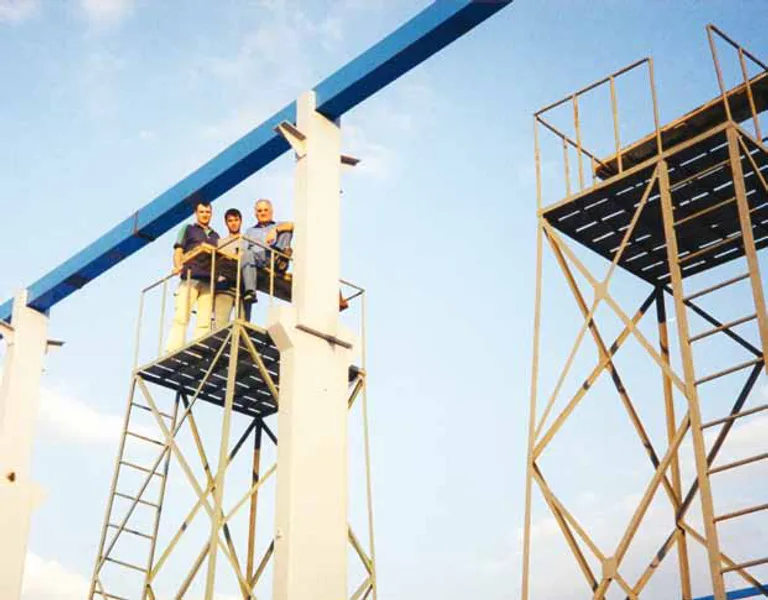
Ali Erdem Koçan, Cem Koçan and Ali Şükrü Koçan, construction of the Hadımköy factory
Ali Erdem Koçan, Cem Koçan and Ali Şükrü Koçan, the Hadımköy building site
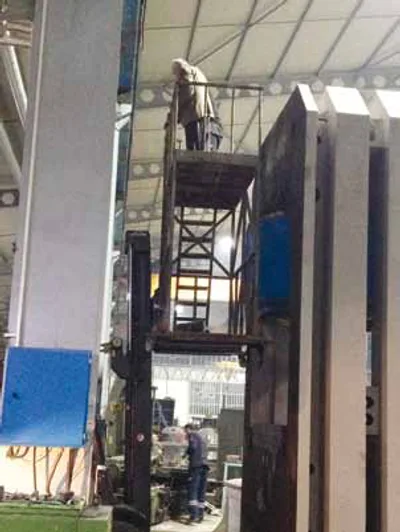
Ali Şükrü Koçan with his staff on top of a press
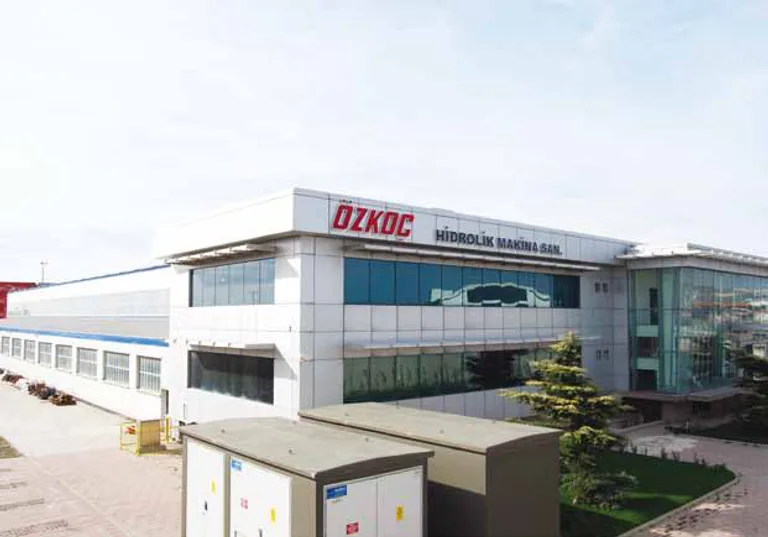
ÖZKOÇ Hadımköy factory building

Today: hydraulic presses from 707,000 tonnes.

Browse the presses →Request a quote →