Silicone Curing Press
- Solid silicone compound workIt is the machine for production from solid compound; injected liquid silicone is a different route.
- The same hot press family as the melamine and rubber presses
What is a Silicone Curing Press?
The silicone curing press turns solid silicone compound into a finished part by vulcanising it under pressure in a heated mould. What is decisive is not force but the balance of temperature and time: the mould is heated zone by zone, and cure time and dwell under pressure are held in the recipe.
Is this press right for you?
Suitable
- Shaping solid silicone compound by curing it in a mould
- Multi-cavity baking and cake moulds, silicone kitchenware parts
- Silicone gaskets, bellows and heat-resistant sealing elements
- Skirted insulation parts such as silicone insulators and cable terminations
- If your material is ordinary rubber: Rubber Curing Press
Cookware — parts typically produced in this sector
These images are representative — they show the shape of the part; they are not the exact parts we produce. If you find one that resembles your own part, send us its drawing and we will tell you which press it is made on. Send your part drawing
 representative
Silicone bakeware mould 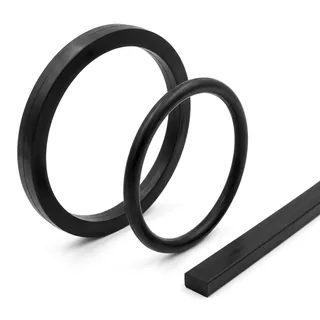 representative
Silicone gasket and sealing element
Automotive — parts typically produced in this sector
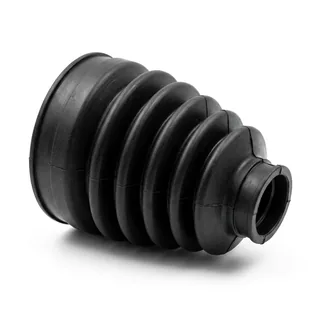 representative
Silicone bellows 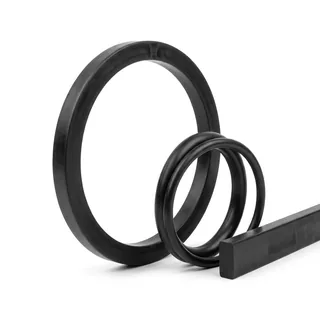 representative
Silicone gasket and sealing element
Electrical & Energy — parts typically produced in this sector
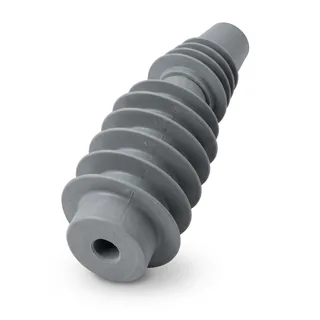 representative
Silicone insulator and cable termination
For those who want the detail
How solid silicone compound cures, and how it differs from injection moulding
Silicone parts are produced in two ways: solid silicone compound is cured by pressing it in a mould, while liquid silicone is injection moulded. This press is the machine for the first route — a measured charge of compound is placed in the mould, vulcanises under pressure between heated platens, and the finished part comes out of the mould. Although both routes use the same material, their machines, moulds and cost structures differ; stating at the outset which route you will produce by makes sure your enquiry reaches the right machine.
Silicone's curing window is narrower than that of most rubbers. Under-cured, the part stays tacky; over-cured, it turns brittle. Temperature and time are therefore tied to the HMI recipe, the mould is heated zone by zone, and thermocouple feedback corrects any deviation within the cycle.
In multi-cavity moulds — baking and cake moulds, gasket cavities — every cavity coming out at the same thickness depends on the parallelism of the platens. The closing profile also determines flash: a mould that closes too fast pushes material out, one that closes too slowly leaves air in the cavity.
The silicone curing press belongs to the same hot press family as the melamine and rubber presses. The frame, the heating infrastructure and the recipe logic are shared; what changes is the mould, the number of zones and the cycle time.
- Zoned mould heating with thermocouple feedback
- Cure time and dwell under pressure held in the HMI recipe
- A platen arrangement that holds cavity-to-cavity thickness variation in multi-cavity moulds
- Flash control through the closing profile setting
- A shared frame family open to melamine and rubber work as well
Rigid frame joined with prepared weld bevels
When the form or the embossing does not come out, the toolmaker is blamed straight away. More often than not the die is not the cause: the press frame deflects under load and the two halves of the die no longer seat fully on each other. The share the frame has in this is usually unknown on the buyer's side, because it is written in no catalogue.
When ÖZKOÇ builds the frame as a welded construction, it joins the crossbeams and the plates BY PREPARING A WELD BEVEL. There are many companies in the sector that join without preparing a bevel; the weld then stays on the surface only. Once the bevel is prepared, the weld penetrates the cross-section and the frame resists deflection under load.
This holds for every frame type, monoblock or column-type — it is not an option that depends on the type of press, it is ÖZKOÇ's manufacturing discipline.
- Crossbeams and support plates are joined with a prepared weld bevel.
- The weld does not stay on the surface, it penetrates the cross-section; the frame does not deflect under load.
- The same discipline is applied whether the frame is monoblock or column-type.