Hydraulic Transfer Press
- One finished part per press strokeAll the steps are pressed in the same cycle; the part is passed automatically between stations.
- No press, operator or die per stepOne machine gathers work spread over separate presses; intermediate handling and work in progress disappear.
- Not just a press, an automation lineThe trimming, cutting and piercing needed between the steps are applied on the same line.
- With sheet cutting or blank feeding, loading and transfer units
What is a Hydraulic Transfer Press?
A transfer press gathers every step of a part formed in several steps into one machine. The part is carried automatically between stations by a transfer arm; at every cycle every step is pressed at the same time and one finished product leaves the press per stroke.
No separate press, separate die and separate operator are needed per step. It is not just a press but automation: the trimming, cutting and piercing needed between the steps are done on the same line. On small-batch work with frequent product changes, however, a single-station press is more economical.
Is this press right for you?
Suitable
- The same part being formed stage by stage in several dies
- High-volume, long-running series work
- Production where handling between steps eats time and labour
- Multi-step parts that need trimming, cutting or holes in between
- If the part is finished in a single deep draw: Deep Drawing Press
- For single-step shallow forming and sizing: Hydraulic Forming Press
- If only cutting or flange trimming is needed: Hydraulic Cutting Press
Cookware — parts typically produced in this sector
These images are representative — they show the shape of the part; they are not the exact parts we produce. If you find one that resembles your own part, send us its drawing and we will tell you which press it is made on. Send your part drawing
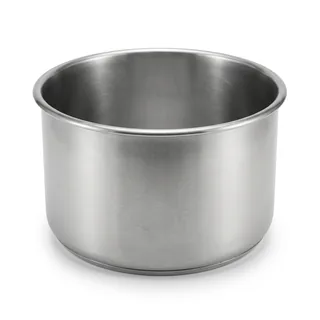 representative
Pot and cauldron body 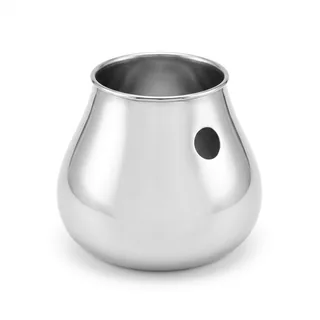 representative
Teapot body  representative
Sink bowl  representative
Lid and frame form
Automotive — parts typically produced in this sector
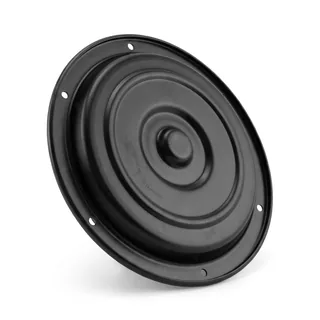 representative
Horn body 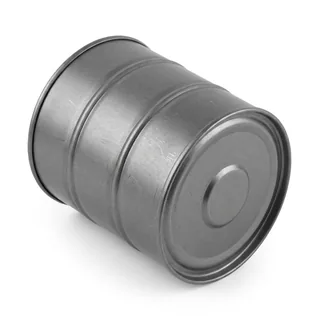 representative
Filter body 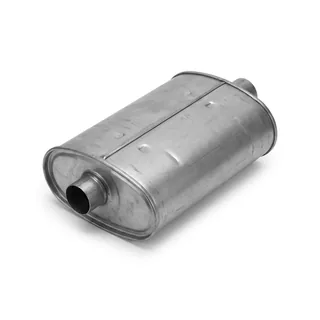 representative
Silencer body
Metalworking — parts typically produced in this sector
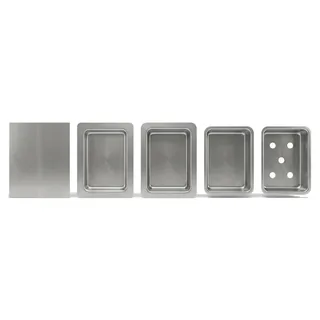 representative
Station sequence on a transfer line 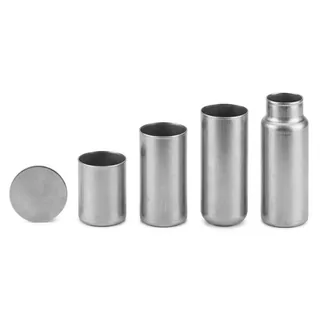 representative
Cylindrical case drawing stages 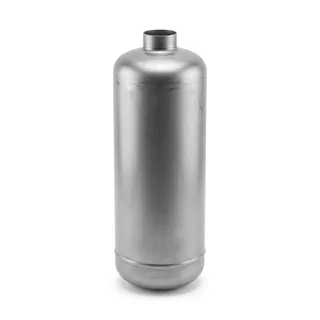 representative
Fire extinguisher body 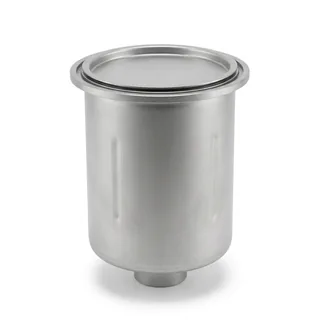 representative
Cylindrical protective housing 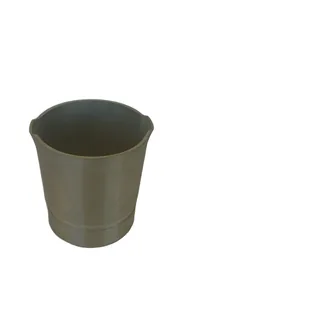
Deep-drawn open vessel body 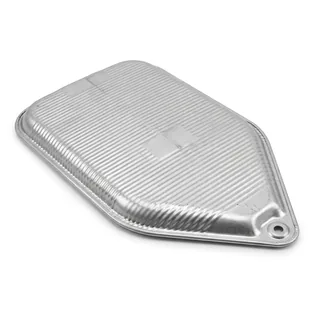 representative
Exhaust heat shield
Defence Industry — parts typically produced in this sector
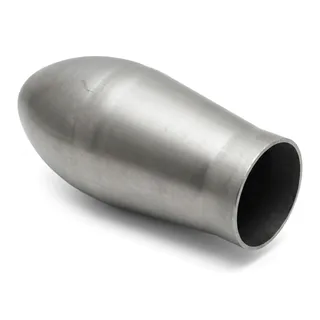 representative
Bomb body preform
This press at work
Tap the cover and the video opens on this page. Until you do, no request goes to YouTube.
MULTI-STATION HYDRAULIC TRANSFER PRESS
Automatic Filter Production with a Fast and Effective Transfer Press
Enamel Pot Sheet Stamping Transfer Press From Disc to Coating
Özkoç Hidrolik - Transfer Press - Automatic pot production
Özkoç Hydraulic Transfer Press - Kettle production
Özkoç Hydraulic Transfer Press - Turkish coffee pot manufacture
Özkoç Hydraulic Transfer Press
For those who want the detail
How it works — and how it differs from a progressive press
Without a transfer press, a part formed in several steps demands a separate press, a separate die and a separate operator for every step. The part is pressed on the first press and carried away; pressed on the second press and carried away again. The result is a factory full of machines, people and work in progress. A transfer press lines these steps up side by side in a single frame: at every cycle every station presses at the same time, and the transfer arm sets the parts down into the next die.
Because the stations work simultaneously, cycle time comes down to the slowest station rather than to the total number of steps. This is where the return on the investment comes from — instead of an operator and a slice of time per step, a finished product per press stroke.
We do not simply call this machine a press, we call it automation. Trimming, cutting or holes are usually needed between the steps; we apply those on the same press too. Set up with sheet cutting or blank feeding, loading and transfer units, the line turns into a production cell that runs on its own from raw material to finished part.
A progressive press and a transfer press are not the same thing. In a progressive press the parts stay attached to the same sheet right to the end; what moves them along is the strip being pushed forward, and the part is cut free from the strip at the very last step. In a transfer press every part is independent from the outset; a separate transfer arm picks them all up together and places them in the next die. Deep, bulky parts cannot be carried on a strip and so fall into transfer's territory.
- Every station presses at every cycle; one finished part leaves the press per stroke.
- Cycle time depends on the slowest station, not on the number of steps.
- Intermediate operations such as trimming, cutting and piercing are done on the same line.
- Progressive: the part stays on the strip and is cut free at the end. Transfer: the part is independent from the outset and is carried by an arm.
- It makes sense on high-volume, long-running work; on small batches with frequent product changes a single-station press is more economical.
Rigid frame joined with prepared weld bevels
When the form or the embossing does not come out, the toolmaker is blamed straight away. More often than not the die is not the cause: the press frame deflects under load and the two halves of the die no longer seat fully on each other. The share the frame has in this is usually unknown on the buyer's side, because it is written in no catalogue.
When ÖZKOÇ builds the frame as a welded construction, it joins the crossbeams and the plates BY PREPARING A WELD BEVEL. There are many companies in the sector that join without preparing a bevel; the weld then stays on the surface only. Once the bevel is prepared, the weld penetrates the cross-section and the frame resists deflection under load.
This holds for every frame type, monoblock or column-type — it is not an option that depends on the type of press, it is ÖZKOÇ's manufacturing discipline.
- Crossbeams and support plates are joined with a prepared weld bevel.
- The weld does not stay on the surface, it penetrates the cross-section; the frame does not deflect under load.
- The same discipline is applied whether the frame is monoblock or column-type.