SMC & BMC Press
- Glass-reinforced thermoset sheetSMC comes as sheet and BMC as bulk; both take shape by curing under heat and pressure.
- Cycle speed is decisiveOnce the material is inside the mould it can start to crystallise; if the press does not close quickly the part is spoiled before it fills.
- A standard frame suited to asymmetric loadsMost products are not symmetrical; the standard design covers most of them without a special construction.
- Ram parallelism systemFour counter-holding points bring the ram down parallel; corner-to-corner thickness variation and material waste fall.
What is a SMC & BMC Press?
The SMC & BMC press shapes glass-fibre reinforced thermoset compounds by curing them under pressure in a heated mould. Tractor bonnets and covers, the complete front panel of a bus and large outdoor electrical cabinets are this press's work.
What is decisive is cycle speed: the material can crystallise once it is inside the mould, and if the press does not close quickly the part is spoiled. On large, asymmetric parts a ram that descends parallel to the platen reduces thickness variation and therefore material consumption. A cured thermoset cannot be remelted; melamine products are not this press's job.
Is this press right for you?
Suitable
- Moulding of glass-fibre reinforced thermoset SMC sheet and BMC bulk
- Large-area, non-symmetrical panels and covers
- Large outdoor electrical enclosures
- For toilet seats and melamine tableware: Melamine Press
- If you will press continuous-fibre prepreg / organosheet: Composite Press
Automotive — parts typically produced in this sector
These images are representative — they show the shape of the part; they are not the exact parts we produce. If you find one that resembles your own part, send us its drawing and we will tell you which press it is made on. Send your part drawing
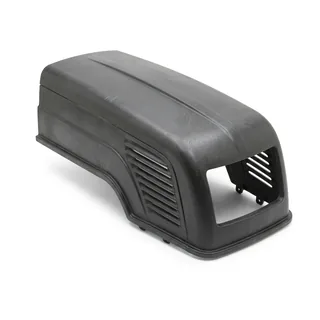 representative
Tractor bonnet and covers 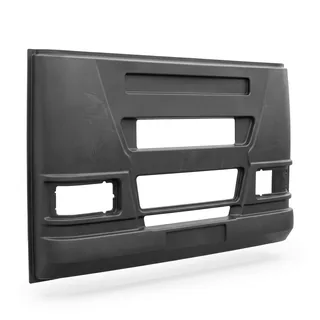 representative
Bus front panel  representative
Composite body panel 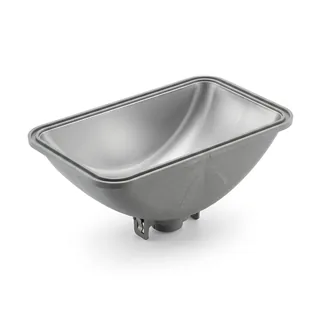 representative
Headlamp and lamp housing 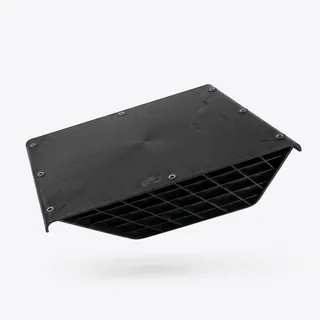 representative
Ribbed composite structural panel
Defence Industry — parts typically produced in this sector
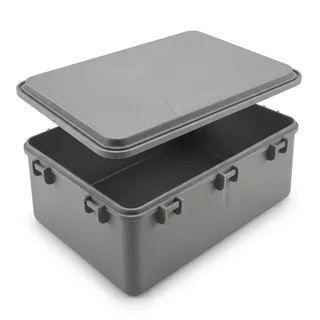 representative
Composite housing box and lid 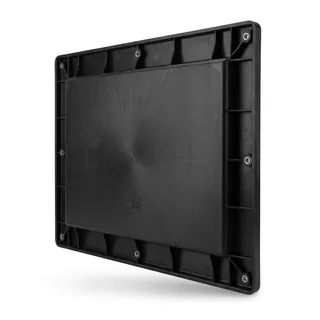 representative
Ribbed composite structural panel
Electrical & Energy — parts typically produced in this sector
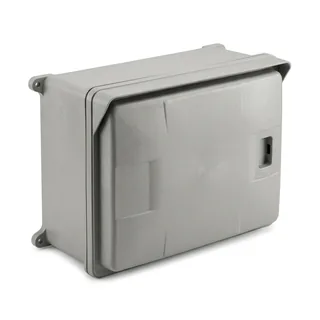 representative
Outdoor electrical enclosure 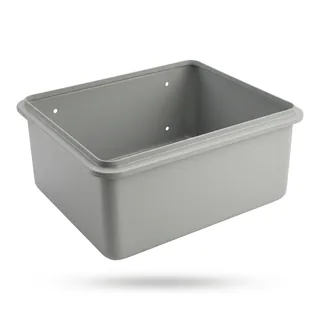 representative
Switchgear enclosure and insulator 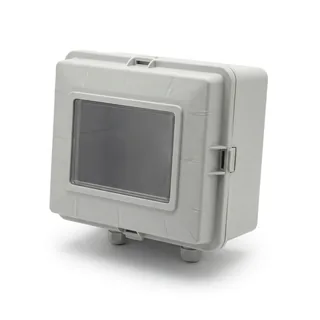 representative
Meter box 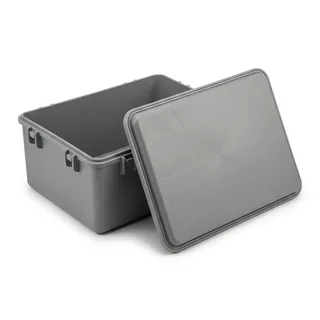 representative
Composite housing box and lid
From the field: 10 ÖZKOÇ presses on one SMC line
An SMC composite parts manufacturer chose ÖZKOÇ again each time it expanded its line. Today ten ÖZKOÇ hydraulic presses, from 250 to 3000 tonnes, run side by side on the same line, and the first presses installed are still in production.
The table shows only the presses on this line; the values are taken from their labels as seen in the video. We build SMC presses up to 7,000 tonnes and size the pressing force and bolster for your own part together with you.
| Pressing force | Bolster | Stroke |
|---|---|---|
| 3000 t | 3500 × 2200 mm | 1700 mm |
| 2500 t | 3500 × 2200 mm | 1400 mm |
| 1500 t | 3000 × 2200 mm | 1400 mm |
| 1200 t | 2600 × 2000 mm | 1100 mm |
| 1000 t | 2400 × 2000 mm | 1500 mm |
| 800 t | 2300 × 1500 mm | 1300 mm |
| 800 t | 2100 × 1500 mm | 1300 mm |
| 600 t | 1800 × 1500 mm | 900 mm |
| 350 t | 1300 × 1000 mm | 700 mm |
| 250 t | 1300 × 1000 mm | 600 mm |
This press at work
Tap the cover and the video opens on this page. Until you do, no request goes to YouTube.
SMC COMPOSITE LINE: 10 HYDRAULIC PRESSES (250–3000 TONNES)
Özkoç - Hydraulic Composite Press
For those who want the detail
How it works: curing, cycle speed and ram parallelism
SMC is a glass-fibre reinforced thermoset sheet; BMC is the same chemistry in bulk form. Both are placed in a heated mould, the press closes, and the material flows and cures under pressure. A cured thermoset does not go back — so the cycle leaves no room for melting down and trying again; it is a get-it-right-first-time job.
Cycle speed is therefore not a comfort but a quality requirement. The material can begin to crystallise the moment it enters the mould; if the press does not close fast enough the part is spoiled before it has even filled. ÖZKOÇ designs this press to close fast.
The second issue is asymmetry. Most parts produced on this press are not symmetrical in geometry: a tractor bonnet, a bus front panel, a large electrical cabinet. An asymmetric part produces an asymmetric load in the mould; if the ram tilts to one side, a thickness difference appears between one corner of the part and the other. Extreme asymmetry calls for a special construction, but ÖZKOÇ's own standard design has proved suitable for many asymmetric applications without any special solution.
On large parts the ram parallelism system designed by ÖZKOÇ comes into play: roughly four counter-holding systems keep the ram descending parallel to the lower platen. For the buyer this translates into the following:
- Corner-to-corner thickness variation across the part is reduced to a minimum
- Material is saved; no extra wall thickness is added as a safety margin
- Because the material is homogeneous, the strength comes out as intended
- No extra heat or material is spent
Rigid frame joined with prepared weld bevels
When the form or the embossing does not come out, the toolmaker is blamed straight away. More often than not the die is not the cause: the press frame deflects under load and the two halves of the die no longer seat fully on each other. The share the frame has in this is usually unknown on the buyer's side, because it is written in no catalogue.
When ÖZKOÇ builds the frame as a welded construction, it joins the crossbeams and the plates BY PREPARING A WELD BEVEL. There are many companies in the sector that join without preparing a bevel; the weld then stays on the surface only. Once the bevel is prepared, the weld penetrates the cross-section and the frame resists deflection under load.
This holds for every frame type, monoblock or column-type — it is not an option that depends on the type of press, it is ÖZKOÇ's manufacturing discipline.
- Crossbeams and support plates are joined with a prepared weld bevel.
- The weld does not stay on the surface, it penetrates the cross-section; the frame does not deflect under load.
- The same discipline is applied whether the frame is monoblock or column-type.
Ram parallelism system
On wide and asymmetric parts the load bears on one corner of the ram; the ram comes down slightly tilted and one corner of the part turns out thicker than the other. The result: excess material, uneven strength, unnecessary heat and cycle time.
In the ram parallelism system designed by ÖZKOÇ itself, four counter-pressure cylinders bring the ram down parallel to the lower plate. The difference in thickness between the corners drops to a minimum; material is saved, and the homogeneity of the part keeps the strength where it is wanted.
The same arrangement works in cutting as well: at the instant the shear occurs, the counter-pressure cylinders absorb the shock, maintain parallelism and extend the life of the cutting die.
- Four counter-pressure cylinders bring the ram down parallel to the lower plate.
- On a wide and asymmetric part the difference in thickness between the corners drops to a minimum.
- Material savings + homogeneous strength.
- In cutting it absorbs the shock and extends die life.