Medical & Healthcare presses
2 presses
Surface finish and repeatability come first; share your material and tolerance expectations from the outset.
Parts pressed in this sector
These images are representative — they show the shape of the part; they are not the exact parts we produce. If you find one that resembles your own part, send us its drawing and we will tell you which press it is made on. Send your part drawing
 representative
Stainless steel rectangular container and lid 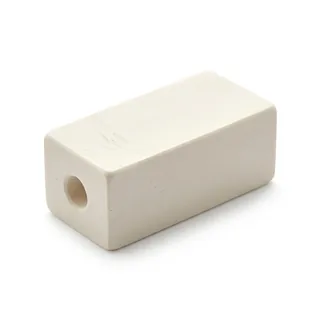 representative
Zirconia block 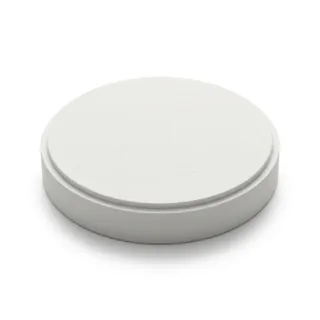 representative
Zirconia disc  representative
Technical ceramic component and green part
Presses used in this sector
 COLD
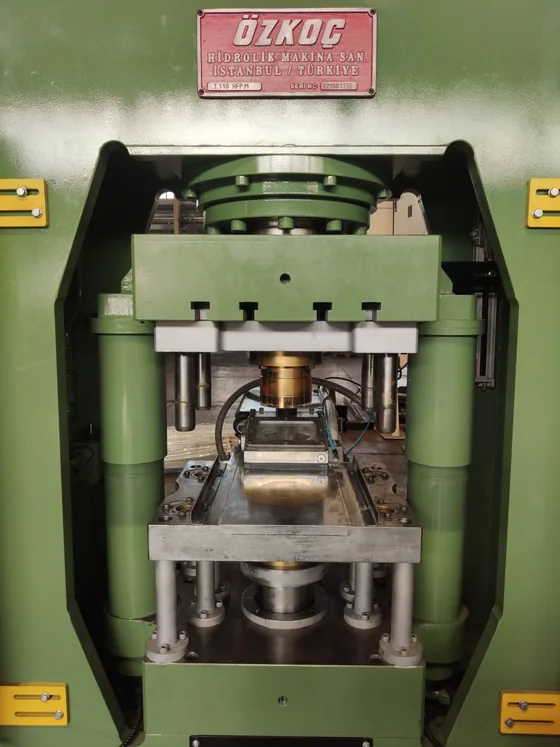
COLDDeep Drawing Press
Deep drawing press — draws sheet metal into seamless vessel and body forms; the blank holder prevents wrinkling, and blank holder force and drawing speed are set independently.
- Stainless steel surgical bowls and trays
- Sterilisation container
- Medical device housing
 SPECIAL
Powder Compacting Press
Powder compacting press — compacts dry powder and granulate blends in a die and turns them into green parts for the kiln; salt cores, zirconia blocks and glass mosaics are pressed in the same class of machine.
- Zirconia blocks for dentistry
- Zirconia discs milled on a CAD/CAM machine
- Technical ceramic green parts
What matters when choosing a press?
Deep Drawing Press
- Adjustable speed and blank holder forceDrawing speed and counter-holding force are set to suit the part in order to keep wrinkling under control. As the sheet gains depth, material builds up at the edge; the blank holder holds it down and eliminates wrinkling.
- Blank holder pressure is decisiveIf the pressure is too low the sheet wrinkles, if it is too high the flow is choked and the part tears; the window between them is narrow.
- Seamless vessels and bodies, multi-stage drawing
Powder Compacting Press
- Dry powder, compacted in the dieThe powder fills the die cavity and interlocks under pressure; the part comes out hard enough to be handled.
- Even density at every pointA difference in density changes shrinkage in the kiln locally; distortion and cracking arise from this.
- Staged pressure, ramped releaseTrapped air that is not vented raises blisters; if the pressure is released suddenly the green body cracks.
- The same principle, different automationSalt cores, zirconia blocks and glass mosaics are the same compaction; what changes is the die and the feeding.